
Resume Writing Basics
About Course
Resume Writing Basics
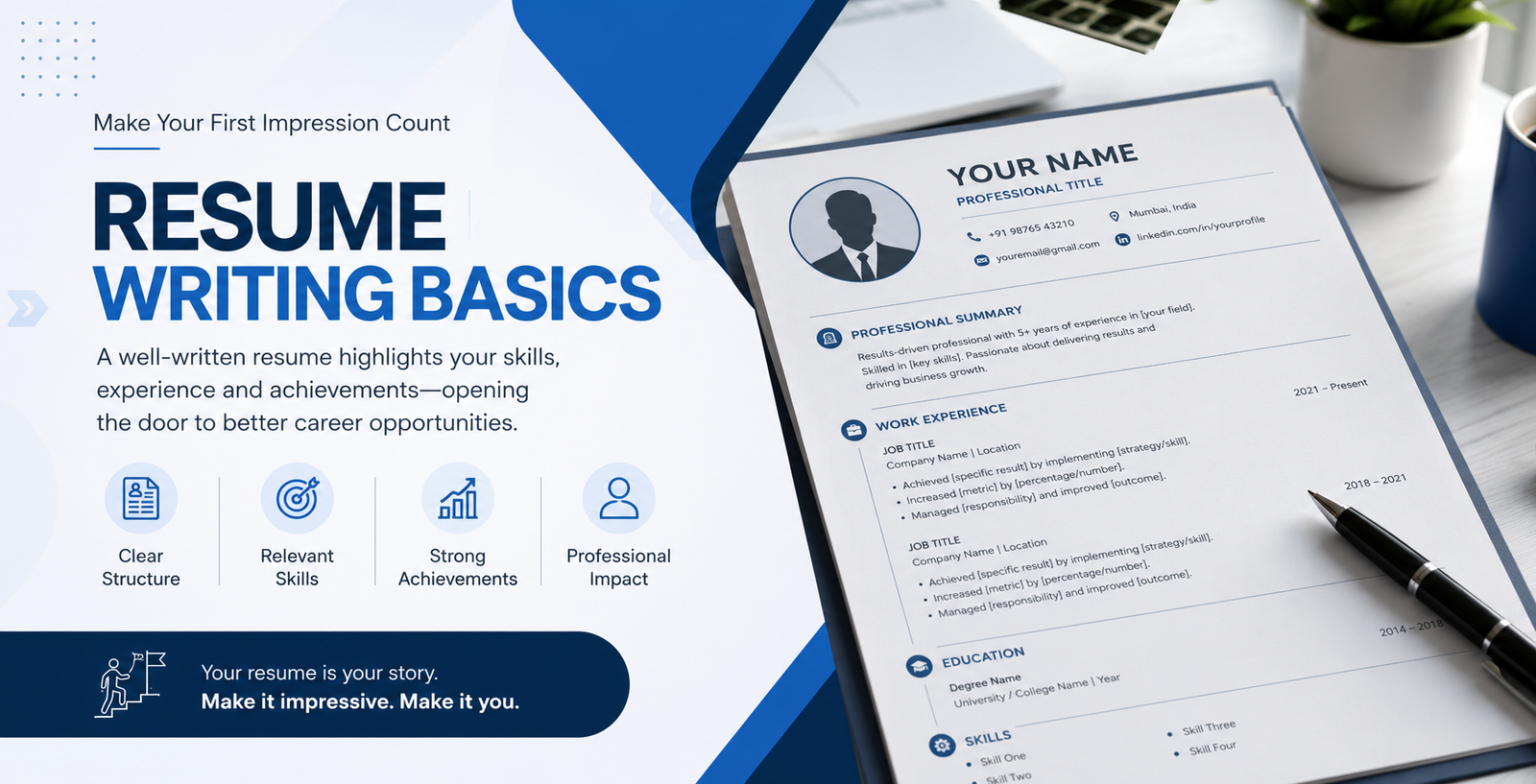
A resume is one of the most important documents in your job search. It is your first opportunity to make a strong impression on a recruiter or hiring manager. A well-written resume highlights your skills, experience, education, and achievements in a clear and professional format, increasing your chances of being shortlisted for an interview.
What is a Resume?
A resume is a concise document that summarizes your professional background, qualifications, and accomplishments. It helps employers quickly understand whether you are a suitable candidate for a specific role. Most recruiters spend only a few seconds reviewing a resume, making it essential to present relevant information in an organized and easy-to-read manner.
Why is a Good Resume Important?
A professionally crafted resume can:
-
Create a positive first impression.
-
Highlight your strengths and accomplishments.
-
Demonstrate your qualifications for the role.
-
Increase your chances of getting shortlisted.
-
Help you stand out from other applicants.
Essential Sections of a Resume
1. Contact Information
Include accurate and up-to-date contact details such as:
-
Full Name
-
Mobile Number
-
Professional Email Address
-
City and State
-
LinkedIn Profile (optional but recommended)
-
Portfolio or Personal Website (if applicable)
2. Professional Summary
Write a brief introduction of 2–4 sentences that summarizes your experience, key skills, and career objectives. Tailor this section to the position you are applying for.
Example:
“Results-driven Marketing Executive with over 4 years of experience in digital marketing, brand management, and lead generation. Skilled in SEO, social media marketing, and campaign optimization. Passionate about driving business growth through data-driven marketing strategies.”
3. Work Experience
List your employment history in reverse chronological order.
For each position include:
-
Job Title
-
Company Name
-
Location
-
Employment Duration
-
Key responsibilities
-
Major achievements
Instead of simply listing duties, focus on measurable accomplishments.
Example:
-
Increased website traffic by 45% through SEO optimization.
-
Generated over 300 qualified leads through digital marketing campaigns.
-
Reduced recruitment turnaround time by 30%.
4. Education
Mention:
-
Degree or Qualification
-
Institution Name
-
Graduation Year
-
Percentage or CGPA (if relevant)
5. Skills
Include skills relevant to the job.
Examples include:
Technical Skills
-
Microsoft Excel
-
Google Analytics
-
WordPress
-
SQL
-
Adobe Photoshop
Soft Skills
-
Communication
-
Leadership
-
Problem Solving
-
Teamwork
-
Time Management
-
Adaptability
6. Certifications
Mention industry-recognized certifications that strengthen your profile.
Examples:
-
Google Digital Marketing Certification
-
AWS Certified Cloud Practitioner
-
PMP Certification
-
Microsoft Azure Fundamentals
-
HubSpot Content Marketing Certification
7. Projects
Include projects that demonstrate practical experience, especially if you are a fresher or changing careers.
Mention:
-
Project Name
-
Objective
-
Technologies Used
-
Results or Outcomes
8. Achievements
Highlight awards and recognitions such as:
-
Employee of the Month
-
Sales Awards
-
Academic Honors
-
Hackathon Winner
-
Best Performer Awards
Resume Writing Tips
-
Keep your resume to one page if you have less than five years of experience.
-
Use a clean and professional layout with consistent formatting.
-
Customize your resume for every job application.
-
Include keywords from the job description to improve Applicant Tracking System (ATS) compatibility.
-
Use bullet points for better readability.
-
Quantify your achievements wherever possible.
-
Proofread carefully to eliminate spelling and grammatical errors.
-
Save and share your resume as a PDF unless another format is requested.
Common Resume Mistakes to Avoid
-
Using an unprofessional email address.
-
Including irrelevant personal information.
-
Writing lengthy paragraphs instead of concise bullet points.
-
Adding false information or exaggerated claims.
-
Using inconsistent fonts and formatting.
-
Listing every job responsibility without highlighting achievements.
-
Submitting a resume with spelling or grammatical errors.
-
Sending the same resume for every job without customization.
ATS (Applicant Tracking System) Tips
Many companies use ATS software to screen resumes before they reach recruiters. To improve your chances:
-
Use standard section headings like “Work Experience” and “Education.”
-
Include relevant keywords from the job description.
-
Avoid graphics, tables, and excessive formatting.
-
Use common fonts such as Arial, Calibri, or Times New Roman.
-
Save your resume in PDF or DOCX format if accepted by the employer.
Final Thoughts
A resume is more than a list of qualifications—it is your personal marketing document. A strong resume effectively communicates your value, showcases your accomplishments, and demonstrates why you are the right candidate for a role. By focusing on clarity, relevance, measurable achievements, and ATS-friendly formatting, you can significantly improve your chances of securing interviews and advancing your career.
Student Ratings & Reviews